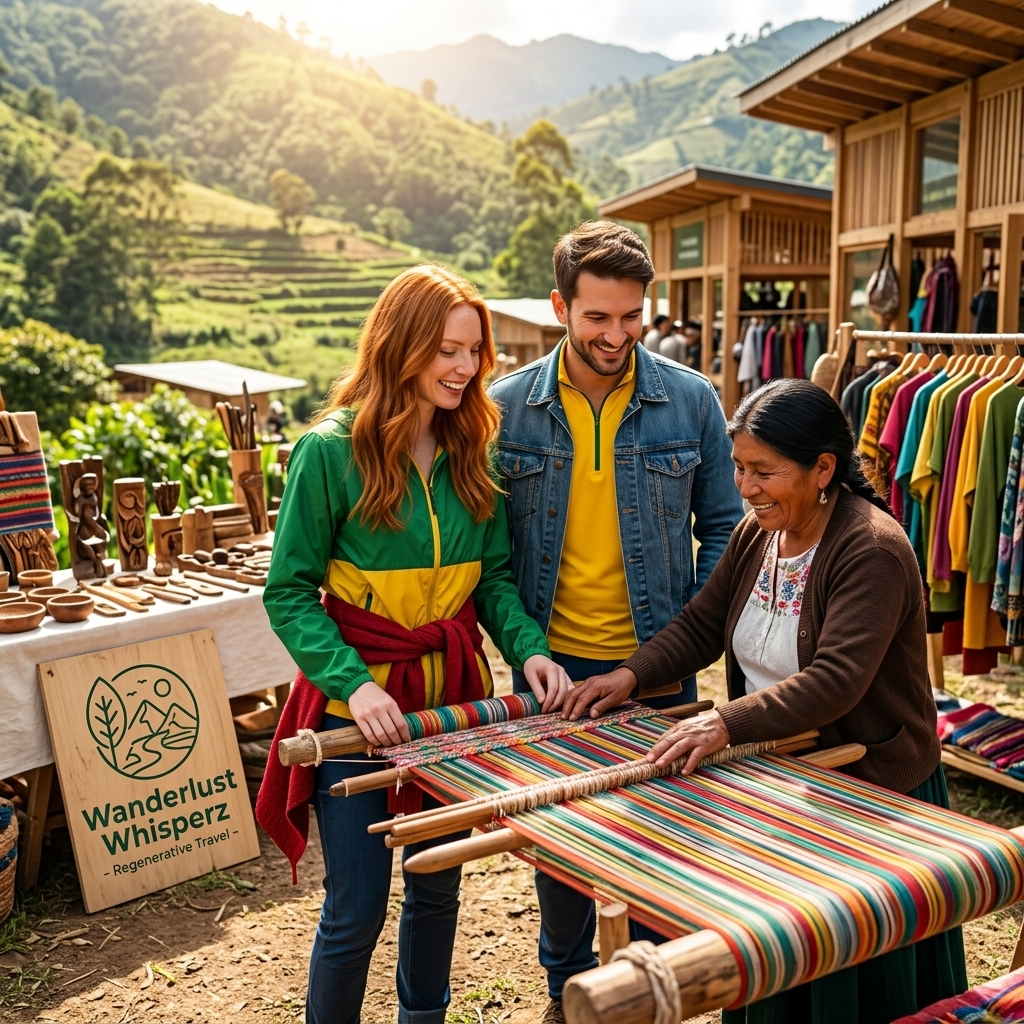
Plugging the Leak: Why Regenerative Travel is the Ultimate Adventure
We are officially navigating the 'Great Transition.' As the 2026 travel economy faces a systemic polycrisis, minimizing harm is no longer enough. It’s time for the Mindful Mapper to demand regenerative sovereignty.
🎧 Deep Dive: Plugging Economic Leakage
Join the audio debrief on the transition from extractive commodification to regenerative tourism.
The End of Extractive Trivialities
Hey explorers, Val here. Let’s get real. The days of treating travel destinations like amusement parks—where local culture is stripped of its soul and served up as a consumable product—are officially behind us.
For too long, the travel industry has operated entirely on an extractive loop, pushing destinations into "Museumification," where ancient traditions and localized realities are frozen in time simply to entertain out-of-town guests. This isn't just mildly annoying for the locals; it's a structural vulnerability causing profound 'Ontological Insecurity'—the gradual hollowing out of a community's own identity.
True exploration means acknowledging that our host communities are living, breathing ecosystems—not static backdrops for a photo op.
The Data: Where is Your Money Actually Going?
Chip coming in with the numbers! At Basecamp, we are obsessed with data, and the 2026 econometric metrics around tourism are staggering. Have you ever wondered why beautifully visited towns remain economically disenfranchised? It's called Economic Leakage.
In the traditional mass-tourism model, a jaw-dropping 70% to 90% of the revenue generated exits the host community immediately. When you account for the multi-tier global supply chains—plus the 2.1% cut taken by global Online Travel Agencies (OTAs)—the money simply hemorrhages out to distant stakeholders rather than supporting the families you interacted with.
| Model | Revenue Retention | Ecological Impact |
|---|---|---|
| Mass Tourism (Extractive) | Severe Leakage (70–90% leaves) | Linear (Heavy carbon debt) |
| Community-Based Tourism (CBT) | High Retention (70–100% stays) | Circular (Localized resource loops) |
The Push Towards Regenerative Sovereignty
So, how do we fix this? The answer isn't staying home—it’s changing entirely how we show up. We need to transition toward the Community-Based Tourism (CBT) model.
Under CBT, decision-making power isn't held by foreign investors or distant government bodies; it resides exclusively with local community committees, elders, and indigenous cooperatives. It is an "epistemic shift" where the local populace maintains cultural sovereignty over how, when, and if their heritage is showcased to outsiders.
The beauty of this is multi-pronged: Not only does it protect the authentic soul of the community, but the economic retention flips entirely. Up to 100% of your dollars stay within direct households, providing robust, un-diluted capital that empowers the region.
Nudging Toward the "Whycation"
We are seeing an incredible shift toward the "Whycation"—trips grounded in emotional objectives, ecological restoration, and deep connection. And you can practice this on the ground using simple behavioral nudges!
- Choose the Default: Opt-out of generic international chains. Book your stays with locally owned and operated heritage lodges.
- Opt for the 'Shelf-ie': Over 52% of tourism leakage is tied directly to the "take-make-dispose" souvenir industry. Decline plastic magnets (which hit 176°F Curie points in landfills!) and instead invest in highly durable, artisanal, locally crafted heirloom "Shelf-ies" which boast near-zero carbon footprints.
- Adopt Circular Travel Hygiene: Leverage off-grid efficiency items (like the SOS Solar Phone Charger) so that you aren't drawing away precious municipal grid power when venturing into remote, sensitive communities.
As you plan your 2026 routes, challenge yourself to ask: "Who owns the narrative I am paying to experience?" Support true cultural sovereignty, and embrace the adventure of preservation!